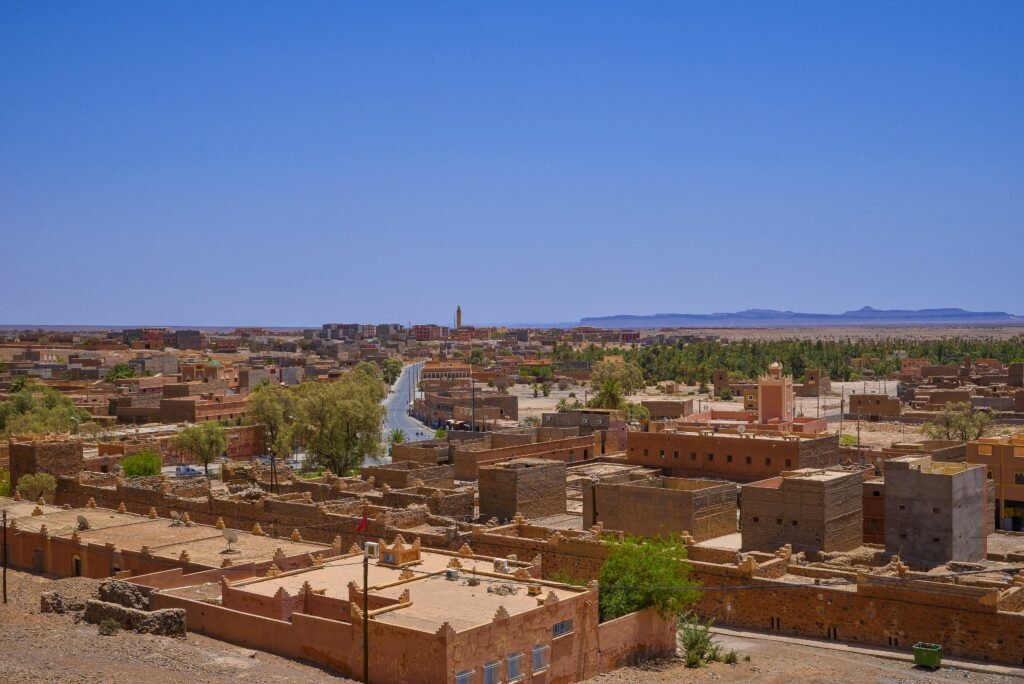
In the heart of Morocco, Foum Zguid stands as a symbol of the country’s deep cultural and historical roots. For centuries, it has been a key spot for trade and cultural sharing.

The town’s location has made it a place where different cultures meet. Various tribes and civilizations have shaped its architecture, traditions, and lifestyle. This is why Morocco heritage shines brightly in Foum Zguid’s lively culture.
Key Takeaways
- Foum Zguid is a significant cultural and historical hub in Morocco.
- The town is a crossroads of the desert, facilitating trade and cultural exchange.
- Morocco’s rich heritage is evident in Foum Zguid’s architecture and traditions.
- The town’s history is a blend of various cultures and civilizations.
- Foum Zguid offers a unique cultural experience for visitors.
The Geographic Significance of Foum Zguid
Foum Zguid sits at the edge of the Sahara Desert. It’s a key spot because of its location. This has greatly influenced its history and importance.
Location at the Edge of the Sahara
Foum Zguid is at the Sahara Desert’s edge and more livable areas. This spot is vital for trade and cultural exchange.
Natural Features Shaping Its Historical Importance
Near Foum Zguid, there are oases and mountains. These features have made it historically important. They gave food and safety and helped guide trade and migration.
| Geographic Feature | Historical Significance |
|---|---|
| Oases | Provided water and sustenance for travelers and traders |
| Mountain Ranges | Offered natural protection and guided migration routes |

The mix of these features has made Foum Zguid a major historical and cultural center.
Origins and Early Settlements in the Region
Exploring Foum Zguid’s origins shows a mix of ancient history and archaeological finds. Its spot at the Sahara Desert’s edge drew early humans.
Prehistoric Evidence and Archaeological Sites
Foum Zguid has many archaeological sites. They give us clues about ancient communities. Prehistoric evidence like tools and pottery shows their tech and culture.
Notable sites include ancient rock art and burial grounds. They reveal the spiritual and daily lives of past inhabitants.
How to Identify Ancient Settlement Patterns
To spot ancient settlements, look for lots of artifacts or structures. Topography is key too. Ancient places often were near water or fertile land.
| Characteristics | Indicators of Ancient Settlements |
|---|---|
| Topography | Proximity to water sources, fertile soil |
| Artifacts | Presence of tools, pottery, and other relics |
| Structural Remains | Foundations of buildings, walls |
Historian John Smith once said,
“The study of ancient settlements is not just about uncovering the past; it’s about understanding the evolution of human society.”
By looking at these signs and evidence, we learn more about Foum Zguid’s ancient past.
Discovering Foum Zguid Through the Ages
Foum Zguid, a desert town, has a long history. It started with the Berbers and then was influenced by Islam. This mix has made its culture unique and alive today.
Berber Foundations and Cultural Markers
The Berbers were the first to live in Foum Zguid. They left a lasting impact on the town’s culture and buildings. You can see their influence in the traditional villages around the town.
Arab Influence and Islamic Period
Arabs and Islam changed Foum Zguid a lot. They brought new buildings, ways of praying, and customs. Mosques were built, and Islamic traditions were adopted, mixing with Berber culture.
How to Trace Historical Periods in Local Architecture
Looking at Foum Zguid’s buildings can show you its history. Mudbrick and wooden doors show Berber roots. But, the geometric patterns and minarets tell of Arab and Islamic touches.
| Historical Period | Architectural Features | Cultural Influences |
|---|---|---|
| Berber | Mudbrick structures, wooden doors | Indigenous Berber traditions |
| Arab and Islamic | Intricate geometric patterns, minarets | Arab and Islamic architectural styles |
By looking at these buildings, you can learn a lot about Foum Zguid’s rich culture. You’ll understand how history has shaped it.
Caravan Routes: How Desert Trade Shaped Foum Zguid
For centuries, Foum Zguid was a key spot in the desert trade. It connected sub-Saharan Africa to the Mediterranean. This trade greatly influenced the town’s economy and culture.
Mapping the Trans-Saharan Trade Networks
The Sahara Desert was once a vast network of trade routes. Mapping these routes shows Foum Zguid’s importance as a trading hub. It controlled the flow of valuable goods like gold, salt, and ivory.
Goods and Resources That Built the Economy
The economy of Foum Zguid thrived on desert trade. Goods like gold, salt, and ivory were highly valued. They enriched the town and shaped its culture and society.
Visiting Former Trading Posts and Markets
Today, you can see Foum Zguid’s trading history. Visit old trading posts and markets. They give a peek into the town’s lively past and the lives of its traders.
Architectural Heritage of the Desert Crossroads
Foum Zguid sits at the heart of the desert, blending cultures in its architecture. Its traditional kasbahs and fortifications stand as a testament to its rich heritage. These structures have withstood time, preserving the city’s history.
Identifying Traditional Kasbahs and Fortifications
Foum Zguid boasts many kasbahs, vital for defense and trade. These structures are built with rammed earth and mudbrick to face the desert’s harsh conditions. Look for their tower-like designs and detailed doorways to spot them.
How to Appreciate Desert Architectural Techniques
The builders of Foum Zguid’s kasbahs were truly creative. They used earth and wood to build strong, desert-friendly structures. To see these skills in action, look for passive cooling and Islamic architectural elements.
Photography Tips for Historical Structures
Photographing Foum Zguid’s historical sites requires careful planning. Aim for early morning or late afternoon light to soften the desert glare. A polarizing filter can also improve your shots. Try different angles and perspectives to capture the beauty and detail of these ancient buildings.
How to Explore the Historical Sites of Foum Zguid
Foum Zguid’s historical sites are more than just old ruins. They are keys to understanding the desert’s rich history and culture. To truly appreciate them, you need to approach with care and curiosity.
Planning Your Historical Route
Planning your trip is key to a great visit. First, decide which sites you want to see and where they are. Then, figure out how long it will take to see each one well.
- Research the historical significance of each site
- Check the accessibility of the sites
- Plan for transportation between sites
Essential Landmarks and Their Significance
Foum Zguid boasts many landmarks filled with history and culture. Knowing what makes these landmarks special can make your visit even more rewarding.
| Landmark | Historical Significance |
|---|---|
| Kasbahs | Fortified structures that served as centers of trade and governance |
| Oases | Natural havens that supported travelers and local communities |
Best Times and Seasons for Exploration
The desert weather can be tough. The best time to explore Foum Zguid is during the cooler months.
Necessary Preparations for Desert Site Visits
Going on a desert adventure means more than just planning. You also need to pack right. Bring enough water, sun protection, and the right clothes.
- Pack layers for temperature changes
- Bring a first-aid kit
- Stay hydrated
With good planning and knowledge of Foum Zguid’s history, your desert exploration will be both meaningful and memorable.
Experiencing Cultural Traditions in Foum Zguid
Diving into Foum Zguid’s cultural traditions gives you a special look at its heart. This ancient desert crossroads has a rich heritage. It’s kept alive through many cultural practices today.
Participating in Local Festivals
Foum Zguid has many festivals all year round. These celebrate its cultural heritage. Visitors can join in to see these traditions up close. Festivals feature traditional music, dance, and food.
Learning About Traditional Music and Dance
The music and dance of Foum Zguid are key to its culture. Travelers can meet local performers to learn more. Workshops and shows help you understand the region’s traditions better.
Tasting the Culinary Heritage
Foum Zguid’s food shows its cultural mix. Local dishes are made the old way, giving a special taste experience. You can try these dishes at restaurants and stalls.
Etiquette for Cultural Interactions
It’s important to respect local customs when exploring the culture. Knowing the local etiquette makes your visit better. It helps you connect with the community.
By embracing these traditions, visitors can truly appreciate Foum Zguid’s heritage and its people.
The People of Foum Zguid: Engaging with Cultural Diversity
To get to know the people of Foum Zguid, we must explore their tribal histories. These stories have shaped their identity. The area’s rich cultural diversity comes from different tribes and historical events.
Tribal Histories and Influences
The tribal histories of Foum Zguid are rich and varied. Many tribes have left their mark on the region’s culture. You can see their influence in local customs and daily life.
Connecting with Local Communities
To really get to know Foum Zguid, you need to connect with locals. Join local events, visit community gatherings, and talk with residents with respect.
Language Tips for Meaningful Interactions
Language is key when talking to locals. Knowing a few basic phrases can help a lot. Here are some tips:
- Learn basic greetings like “hello” and “thank you.”
- Use respectful titles when talking to elders or leaders.
- Listen carefully to understand the local culture.
By respecting and understanding the local culture, visitors can have a richer experience in Foum Zguid. Here’s a table showing some important cultural practices and their meanings:
| Cultural Practice | Significance |
|---|---|
| Traditional Dress | Shows tribal identity and cultural heritage. |
| Local Cuisine | Highlights the region’s history and cultural influences. |
| Community Gatherings | Strengthens social bonds and cultural exchange. |
Mastering Artisanal Crafts and Heritage Skills
Foum Zguid is a place where you can learn traditional crafts. It’s rich in heritage. Visitors can dive into the local culture by working with skilled artisans.
Finding Authentic Craft Workshops
To really get into Foum Zguid’s artisanal heritage, visit real craft workshops. These places show you the old ways of doing things. Look for:
- Workshops led by experienced artisans
- Opportunities to participate in hands-on crafting
- Use of traditional materials and techniques
How to Participate in Traditional Craft Demonstrations
Joining in on traditional craft demos is a fantastic way to learn. Skilled craftsmen share their knowledge with visitors. To get the most out of it:
- Arrive early to secure a good spot
- Engage with the artisans and ask questions
- Take notes or photos for future reference
Supporting Sustainable Artisan Economies
Buying local crafts helps the sustainable economies of Foum Zguid. It keeps the culture alive and helps the community.
In conclusion, learning artisanal crafts in Foum Zguid is rewarding. It’s a mix of cultural learning and skill-building. By finding real workshops, joining demos, and supporting local artisans, you take home more than memories.
Documenting and Preserving the Legacy of Foum Zguid
To keep Foum Zguid’s culture alive, we must document and preserve it well. This desert crossroads is special not just for its buildings and views. It’s also for the stories and traditions of its people.
Documenting heritage sites needs careful thought in photography and other ways. Here are tips for capturing Foum Zguid’s essence responsibly:
How to Responsibly Photograph Historical Sites
- Respect local customs and traditions when taking photos.
- Don’t use equipment that intrudes or causes trouble.
- Focus on the details that make each site special.
Contributing to Community Conservation Initiatives
Helping local conservation efforts is key for Foum Zguid’s heritage. You can do this by:
- Joining community-led tours.
- Donating to local conservation groups.
- Sharing why preserving cultural heritage matters.
Sharing Experiences While Respecting Cultural Heritage
When sharing Foum Zguid experiences, remember its cultural and historical context. Use your voice to promote responsible tourism and the value of preserving our cultural heritage.
By following these steps, visitors can help save Foum Zguid’s legacy. This way, its history and culture can inspire future generations.
Conclusion: Embracing the Timeless Heritage of the Desert Crossroads
Foum Zguid’s rich heritage shows its importance as a desert crossroads. It’s where different cultures and trade routes meet. This mix has created a unique cultural scene that draws in visitors.
Keeping Foum Zguid’s heritage alive is key to its identity. We must work to save historical sites, support local artists, and foster cultural exchange. These actions help preserve the area’s timeless heritage.
Foum Zguid has been a key player in the Sahara’s history and culture. Its legacy reminds us of the need to protect cultural heritage for the future.
By cherishing and safeguarding Foum Zguid’s heritage, we gain from its deep history and cultural value. This enriches our understanding of desert crossroads and their enduring heritage.
FAQ
What is the historical significance of Foum Zguid?
Foum Zguid is a key spot in the desert. It has a rich history and culture. This is because it sits on the edge of the Sahara Desert.
What are the natural features that have contributed to Foum Zguid’s historical importance?
Foum Zguid’s location at the Sahara’s edge is key. Other geographical features also played a role in its development.
How can I identify ancient settlement patterns in Foum Zguid?
Look for signs of old settlements. Check out archaeological sites and study the local terrain. Also, read historical records.
What are the Berber foundations and cultural markers in Foum Zguid?
Berber culture is seen in Foum Zguid’s architecture and music. The region’s history and traditions also show Berber influence.
How did the trans-Saharan trade networks impact Foum Zguid?
The trans-Saharan trade greatly influenced Foum Zguid. It made the area a key spot for trading goods and resources.
What are the traditional architectural techniques used in Foum Zguid?
Traditional buildings in Foum Zguid are built to withstand the desert. Kasbahs and fortifications show the region’s cultural heritage.
How can I responsibly photograph historical sites in Foum Zguid?
Be respectful when taking photos. Follow local rules and respect the culture and environment.
What are the best times and seasons for exploring Foum Zguid’s historical sites?
Plan your visit based on the local weather. This ensures a better experience at Foum Zguid’s sites.
How can I participate in local festivals and cultural events in Foum Zguid?
Learn about local customs and traditions. Engage with the community to find out about events and how to join in.
What are the essential landmarks to visit in Foum Zguid?
Don’t miss the traditional kasbahs and fortifications. Also, explore other historical and cultural sites in Foum Zguid.
How can I support sustainable artisan economies in Foum Zguid?
Look for authentic craft workshops and artisans. Buy their products or watch traditional crafts being made.